Spectacular!
METICULOUS CAPTURES OF ICONIC GEAR
Analog warmth in Digital precision





Who we are?
Amalgam Audio specialises in premium studio-grade captures of the most desirable vintage, boutique and modern guitar amps, pedals and preamps. Our collection of 140+ amplifiers spans everything from holy-grail vintage pieces and high-end boutique designs to modern classics, high-gain monsters and truly unobtainable exotic gear. Our aim is to provide a viable alternative to the finest analog equipment for studio, live and home use while preserving these iconic tones.
FEATURED Quad Cortex MODELS
choose your platform to find out
HOW IT WORKS
1
Browse & Choose
Explore our curated library of premium amp captures and select the tones that fit your needs.
2
Instant Download
Your files are available immediately after purchase.
3
Import
Unzip the downloaded file and drag & drop the TXP files into the ToneX app. The presets and tone models will be imported automatically.
1
Browse & Choose
Explore our curated library of premium amp captures and select the tones that fit your needs.
2
Enter your Cortex User ID
Important: Enter your Cortex User ID during checkout to ensure delivery.
3
Follow our accounts on Cortex Cloud
Follow our accounts on Cortex Cloud: amalgamaudio, amalgamaudio2, amalgamaudio3, amalgamaudio4, amalgamaudio5
4
Delivery (within 24 hours)
Your captures will be shared within 24 hours of purchase—usually much faster. Please allow up to 24 hours before contacting support.
5
Documentation & IRs
Documentation and IRs (for DI products) are available as instant downloads after purchase. You will also receive an email with your download link. Captures are delivered separately via Cortex Cloud.
1
Browse & Choose
Explore our curated library of premium amp captures and select the tones that fit your needs.
2
Instant Download
Your files are available immediately after purchase.
3
Import
Unzip the files to a folder of your choice. In the NAM app, click the folder icon next to the CAB section and select that folder.
1
Browse & Choose
Explore our curated library of premium amp profiles and select the tones that fit your needs.
2
Instant Download
Your files are available immediately after purchase.
3
Import
Unzip the files and import them into Rig Manager.
Get started in minutes — choose your platform and have access to studio grade tones
WHY CHOOSE US?
Over the past four years, Amalgam Audio has earned the trust of professionals and tone enthusiasts as one of the leading names in amp captures. We deliver studio-grade captures of the most sought-after guitar gear, built to sound and feel right from the first note.
Each pack offers a wide range of tones, carefully dialed into meticulously curated sweet spots to ensure consistency, usability, and musicality across different guitars and playing styles. No endless tweaking—just plug in and play.
With a constantly expanding catalog covering iconic amps and rare finds alike, you can quickly find the right sound for your setup, whether in the studio, on stage, or at home.
140+
Amplifiers captured from an ever growing catalog
11000+
Happy customers around the world
30000+
Orders fullfilled since 2022
LATEST BLOG POSTS
HISTORY OF TONE
Discover the vast collection of legendary tube amps that shaped decades of music throughout countless music genres. From early 50’s american combos up to brutal modern high gain monsters – it’s all here.
Fender Super Bass
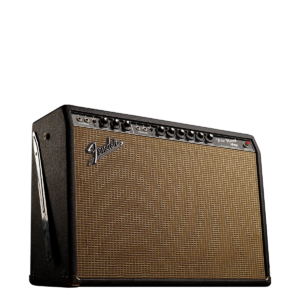
The Super was Leo Fender's personal favorite — the circuit he kept tinkering with — and it was the first Fender ever to carry two speakers. You can spot a V-Front by the chrome stringer splitting its angled baffle between a pair of 10s. Powered by 6L6s, it's raw, woody early-tweed tone in its purest form, finger-jointed pine and all. A real piece of the Fender origin story.
Fender Pro
Think of the Pro as the 5E3 Deluxe's bigger brother: same tweed soul, but a 26-watt 6L6 power section and a single 15-inch Jensen for real low-end heft and an upper-mid push that cuts. Fixed bias and a presence control make it tighter than the Deluxe, so it sails from creamy cleans into warm, woolly grit. A studio sleeper — Tom Petty leaned on one for years.
Fender Deluxe
The amp that defines tweed, and the most copied circuit in history. Just 15 watts from a pair of 6V6s, two interacting volumes and a shared tone — endlessly expressive. Push it and it blooms into that ragged, harmonically rich growl. Neil Young's whole sound lives here; so does Larry Carlton's 'Kid Charlemagne' solo and Billy Gibbons' early grit. Pure touch-sensitive magic.
Fender Bassman
Built for bass, adapted by guitarists, and arguably the most important amp circuit ever made. The 5F6-A's four 10s and 45 watts of 6L6 gave Jim Marshall the blueprint he copied wholesale for the JTM45 — which became the Plexi, which became half the amps you love. Warm jazz, gritty blues, full-throttle rock 'n' roll: crank it and it simply rips. The Rosetta Stone of tube tone.
Gibson GA-6
A 1950s Gibson sleeper and a true rival to Fender's tweed Deluxe of the day. The GA-6 Lancer runs a pair of cathode-biased 6V6s for around 16 watts through a single 12, with a warm, woody midrange that turns gritty and vocal when pushed. Like all old Gibsons, it sings with P-90s. Simple, characterful, and criminally overlooked — a hidden gem of the Kalamazoo years.
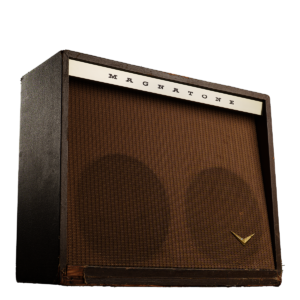
Magnatone Troubadour
Magnatone's answer to the tweed Deluxe, and a small-combo legend. The 213 Troubadour pushes around 18 watts from two 6V6s into a 12 — a woody, mellow voice that erupts into glorious crunch wide open. But the magic is the vibrato: Magnatone's genuine pitch-shifting warble, not Fender tremolo. Buddy Holly, Lonnie Mack, and Robert Cray all fell for it; lately Phil X revived it.
Fender High Powered Twin
Take a tweed Bassman, double the power tubes, swap in two 12s, and you've got the High-Powered Twin — the loud, lordly peak of the tweed era. 80-plus watts from a quad of 6L6s, but unlike the squeaky-clean Twins that followed, this one sags and snarls when you push it. Keith Richards, Eric Clapton and Joe Bonamassa rode its raw roar. The most coveted Fender tweed of them all.
Gibson Les Paul
Gibson's flagship of the late '50s and early '60s — the amp built to partner the Les Paul guitar, and badged to match. This later tolex GA-40 traded 6V6s for a pair of 7591s, adding a touch more power and polish to that warm, midrange-rich Gibson voice, plus the lush onboard tremolo and a unique 'Voicing' control. Pair it with P-90s or humbuckers and it glows.
Supro Dual Tone
A beautiful sound reminescent of early Led Zeppelin. Jimmy Page tracked the first two Zeppelin albums through a Supro 1x12 combo, and the 1624T Dual Tone is that amp: 24 Valco-built watts from a pair of 6973 tubes, with lush tube tremolo and two linkable channels. Glassy at low volume, it turns to rich, harmonically loaded crunch when dimed — and sounds simply enormous miked up.
Gibson Rhythm King
Gibson's big gun — the Rhythm King. A 60-watt 2x12 powerhouse running a pair of mighty 6550s, it was conceived (much like Fender's tweed Bassman) with bass in mind, but guitarists soon discovered its enormous, fearless clean headroom. It stays tight and authoritative where smaller amps fold, with a deep, three-dimensional voice. One of the most muscular amps Kalamazoo built.
Supro Supreme
A streamlined slice of vintage Valco cool. The 1600R Supreme is a single-channel 1x10 putting out about 17 watts of meaty, gritty Supro tone, with that signature rat's-nest-wired Valco character. The 'R' marks it for use with Supro's outboard 600 Reverb unit, which tapped its output for watery spring sound. Raw and characterful — like what a young Hendrix would've cranked.
Fender Champ
Five watts, one 8-inch speaker, a single volume knob — and one of the most-recorded tones in rock history. The 5F1 Tweed Champ breaks up early into a raw, aggressive growl that miked up sounds enormous. Eric Clapton tracked the entire 'Layla' album through one; Joe Walsh and Keith Richards leaned on it too. Pure, simple, cranked-tweed magic in the smallest box Fender made.
Gibson Skylark
Gibson's pint-sized answer to the Fender Champ: a single 6V6, one small speaker, and around 5 watts of pure student-amp simplicity. But don't be fooled — crank the Skylark and it spits out a raw, gnarly little roar that mics up far bigger than its size suggests. With P-90s it's a recording secret weapon for grit and attitude. The tiny Kalamazoo box that learned to bark.
Gibson Ranger
Gibson GA-20 — One of the great vintage Gibsons, and a direct rival to Fender's tweed Deluxe. Around 16 watts from two cathode-biased 6V6s, a single 12, and two channels sharing a tone control — beautifully clean, then thick and gritty when you lean in. Jazz greats from Jim Hall to Pasquale Grasso swore by it, and one modern blues band loved it enough to name themselves GA-20.
Magnatone 260
The bigger Custom-series Magnatone, and the holy grail of pitch vibrato. A pair of 6L6s gives about 30 warm, deep watts, but the 260 is all about that vibrato — a true, varistor-driven pitch warble that swirls and skids around the room, gorgeous and utterly unlike a Fender. Lonnie Mack cut his signature liquid sound on one, following Robert Ward. Heavy, rare, hypnotic.
Supro 1688TN
The bigger, brawnier Supro. The 1688TN is a high-powered Dual Tone, swapping the usual small-bottle output for a pair of 7027A (6L6) tubes and a 5U4 rectifier for around 30-35 watts of Valco grind. Two interactive, jumperable channels — one voiced like a Thunderbolt, one like a Dual Tone — plus lush tremolo. Plenty of power for the stage, gorgeous in the studio.
VOX AC30/4 EF86
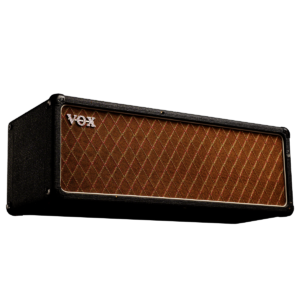
Before Top Boost, there was this. The early four-input AC30 in its handsome fawn covering, the raw original Vox voice that powered the dawn of British rock. Warmer and woodier than its later siblings, it still chimes like nothing else once you lean on it. This is where The Shadows first found their sparkle. The original blueprint for every chiming British amp that came after.
Gibson Falcon
Gibson beat Fender to onboard reverb by a good two years, and the Falcon is the proof — a 15-watt 1x12 with two 6V6s, lush reverb from a whisper to cavernous, and gorgeous pulsing tremolo. Think of it as a brighter Tweed Deluxe with effects baked in: clean and chimey until you push it, then a thick, snarly growl. A killer club-and-studio sleeper that punches above its price.
Fender Deluxe Reverb
If you could keep only one Fender, plenty of players would name this. 22 watts, a single 12, and a pair of 6V6s — loud enough to gig, but it hits that glorious edge-of-breakup sweet spot at volumes you can actually use. Add the lushest spring reverb and vibrato Fender ever made, and you've got the most-recorded combo in studio history. The blackface benchmark.
Fender Deluxe
The little Fender that thinks it's a Marshall stack. The brownface 6G3 sits right between tweed and blackface — 20 watts of fixed-bias 6V6 with a hot front end that tips into thick, crunchy overdrive way before you'd expect. Add the first onboard tremolo Fender put in a Deluxe, deep and hypnotic, and ferocious touch response. A studio secret of Billy Gibbons and Joe Bonamassa.
Fender Concert
The brownface 4x10 with a secret weapon: Fender's first harmonic vibrato, a swirling, watery throb the company never bettered. 40 watts of 6L6 with Bassman DNA and a solid-state rectifier give it loads of tight, blooming clean headroom — push it hard with single-coils and you find that gorgeous, mild 'brown' grind. The missing link between the Tweed Bassman and Super Reverb.
Fender Showman
Leo Fender built the Showman hand in hand with Dick Dale, the king of surf guitar, who kept blowing up everything else he played. This blonde piggyback answers with 85 loud, clean watts and a JBL-loaded cab that simply refuses to quit. Add the gorgeous pitch-shifting harmonic vibrato of the brownface era and you've got the amp that launched a thousand surf-rock waves.
Fender Vibroverb
The amp that brought reverb home — the very first Fender ever built with onboard spring reverb, made for a single year in 1963. A 'soft' 40 watts through a pair of 10s, brownface-warm and never harsh, with the lush bias-vary tremolo of a Princeton Reverb and touch response that runs from clean shimmer to gritty growl on a dime. Fewer than 600 made, and endlessly coveted.
Gibson Skylark
The Skylark reborn for the 1960s in Gibson's sharp, slant-front Crestline livery. Still a tiny firecracker — a handful of watts through one small speaker — but with that early-'60s restyle and, on many examples, a pulsing onboard tremolo. It breaks up the instant you dig in, serving raw garage grit and lo-fi snarl. A featherweight that's far more fun than its size suggests.
VOX AC4
Don't let four watts fool you. The little AC4 is where the Vox magic hides at bedroom volume, one EL84 cooking into early, sweet, singing breakup that bigger amps can't touch without waking the neighbours. A studio secret kept by tone-chasers for decades, loved for fat, characterful grind at the turn of one knob. Tiny box, enormous personality, pure Vox from input to speaker.
Fender Bassman
Not to be confused with the tweed 4x10 — this is the blonde piggyback Bassman, and it's a different animal. 50 watts of 6L6 through a 2x12, bridging sparkling American clean and chunky British crunch with a low-mid thump all its own. It cut more Beatles sessions than the AC30, was a Pete Townshend favorite, and became the amp forever welded to Brian Setzer's rockabilly twang.
Fender Vibroverb
The amp forever fused to Stevie Ray Vaughan's name. A 40-watt blackface combo built around a single 15-inch JBL, it trades the 4x10 sparkle of a Super for a fatter, punchier, more focused voice with massive low-end authority. Lush reverb, hypnotic vibrato, and a clean that turns to molten blues grind when you dig in. Rare, coveted, and pure Texas firepower.
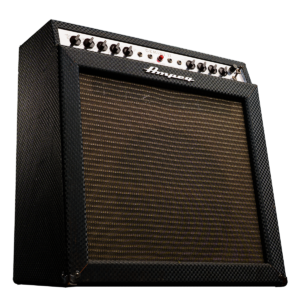
Ampeg Gemini II
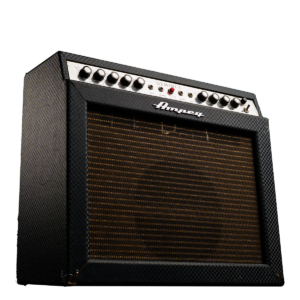
The Gemini I's bigger sibling, trading the 12 for a 15-inch Jensen and pushing 30 watts of wide, deep, room-filling clean. That extra cone adds real low-end heft and a huge soundstage, while the reverb and tremolo stay every bit as gorgeous. Lean into it and it breaks up into a sweet, singing overdrive. Loved by Mike Mills of R.E.M. and Cracker's Johnny Hickman alike.
Selmer Zodiac 30
Britain's most stylish answer to the Vox AC30. Wrapped in mock-crocodile skin, the early-'60s Zodiac Twin 30 makes around 30 watts from a pair of EL34s with an EF86-driven front end all its own — no Vox copy. Its 'Selectortone' channel adds six pushbutton tone presets and tremolo with a pulsing green 'magic eye.' Rare, gorgeous, and full of quirky British character.
Selmer Treble n Bass 50
Selmer's longest-running and best-loved amp — a British workhorse built from the early '60s into the '70s. The Treble 'N' Bass paired EL34 power with two linkable channels, Treble and Bass, for a raw, midrange-forward roar you could shape and stack. Early Pink Floyd were among the UK bands who leaned on Selmer amps. Loud, gutsy, and a little wild — characterful English tone.
Silvertone 1484
The Sears catalog's flagship — a garage-rock legend. Danelectro-built, the 1484 Twin Twelve is a piggyback head and 2x12 making a rated 60 watts (really more like 35) from a pair of 6L6s, with killer tremolo. Cheap when new, it became a cult favorite for its grimy, lo-fi 'brown' crunch. Jack White, Beck, and Lou Reed chased its sound. Great tone never needed a fancy badge.
VOX AC30 Top Boost
The amp that built the British sound. Add the Top Boost circuit's extra gain and treble to those EL84s and Celestion Blues and you get that unmistakable Vox chime: glassy, jangly, gorgeously compressed when pushed. The Beatles, Hank Marvin, Brian May, The Edge and Tom Petty all leaned on it. For shimmering cleans and snarling rock alike, nothing on earth chimes quite like it.
Watkins Dominator
Possibly the best-looking amp ever built. That wedge-shaped V-front fires two 10s outward for a huge, room-filling spread while a pair of EL84s serve up sweet British chime and early grind. Too quiet for big stages, but nearly every young UK guitarist coveted one, and it's said to have inspired Marshall's 18-watt combo. Rare, ridiculously beautiful and entirely its own beast.
Fender Super Reverb
Four 10s, 40 blackface watts, and arguably the finest clean tone Fender ever bottled. The Super Reverb's quartet of tens throws a wide, three-dimensional wall of chime, with lush reverb and that watery vibrato on tap. Push it and it sings with a thick, vocal grind. Stevie Ray Vaughan built his roar on a wall of them — the gold standard for blues and roots tone.
Fender Champ
The little blackface practice amp that punches far above its size. One 6V6, a single 8-inch speaker, around 5 watts — but brighter, firmer, and more scooped than its tweed forebear, with proper bass and treble controls. Crank it and it growls with that unmistakable Champ snarl. A studio staple for fattening up a track, and the amp a generation of players learned on.
Ampeg Gemini I
The house amp of mid-'60s New York recording studios and the Manhattan jazz crowd — a 22-watt 1x12 that sounds nothing like a Fender, Vox, or Marshall. Glassy, three-dimensional cleans, some of the lushest reverb and tremolo ever built into a tube amp, and a midrange that knifes through any mix when you dig in. Born for accordion, adopted by jazz, blues, and classic rock.
Supro Super
Supro's answer to the tweed Champ — a tiny single-ended 6V6 putting out around five watts through a small speaker. Past about halfway on its lone volume knob it stops getting louder and just gets dirtier, going from sweet, thick cleans to gnarly, super-saturated grit. A cheap little Valco student amp in its day, it's now a beloved recording secret weapon for huge lo-fi tone.
VOX AC50
When stadiums got loud and the screaming drowned out the AC30, Vox went bigger. The AC50 gave The Beatles the muscle to cut clean through the roar of Beatlemania: fifty watts of headroom with that Brilliant-channel sparkle still intact. Same chime, just far more room to breathe. It's the AC30's louder, brasher brother, born when British rock outgrew the clubs for good.
VOX AC-30 Top Boost Trapeze
The slope-sided oddball of the JMI years. This Top Boost AC30 wears original Woden transformers that tilt its voice brighter, tighter and punchier than the copper-panel norm: more headroom, more focus, still all chime. Round cleans, edge-of-breakup shimmer or vicious riffs, it does the lot. A rarer, sharper, more articulate take on the most famous amp Britain ever built.
Fender Bassman
By the blackface era the Bassman had become a 50-watt piggyback head — a clean, punchy, no-frills workhorse built for bass but happily adopted by guitarists. Two 6L6s deliver tight, firm low end and a big, open clean that takes pedals beautifully and breaks up with a satisfying bark when cranked. Less famous than its tweed ancestor, but a rugged, road-ready tone machine.
Fender Princeton Reverb
The studio world's not-so-secret weapon. A 12-watt, 1x10 blackface combo with a pair of 6V6s, lush spring reverb, and that swampy opto-tremolo — small enough to crank in a room, sweet enough to live on a thousand records. It stays glassy and clear until you push it, then breaks into a warm, singing grind. Pound for pound, maybe the most-recorded little amp ever made.
Fender Dual Showman
Fender's flagship blackface piggyback: an 85-watt head over a 2x15 cabinet loaded with JBLs, built to fill the biggest stages with clean, fearless power. The two 15s move serious air, staying tight and glassy where lesser rigs would buckle, with reverb-free muscle and that signature blackface vibrato. Pete Townshend hauled them across America. Built to be heard over anything.
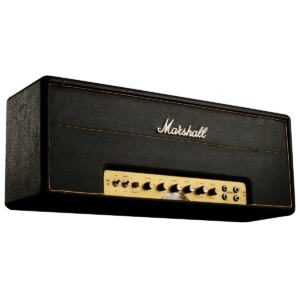
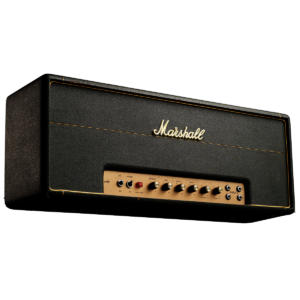
Marshall Super 100 Amplifier
Marshall's very first 100-watt amp — the 1965 Super 100, built when Pete Townshend and John Entwistle demanded more firepower. It ran four KT66 tubes through a pair of output transformers, since Marshall had no single 100-watt OT yet. The result: a huge, warm, slightly loose roar — the JTM45's bluesy soul at wall-of-sound size. The amp that launched the Marshall stack.
Fender Twin Reverb
85 watts, two 12s, and headroom for days — the loudest, cleanest blackface of them all. The Twin Reverb stays glassy and pristine no matter how hard you hit it, which made it the go-to for country pickers, jazzers, surf bands, and anyone needing a pedal platform that never flinches. Stack the lush reverb and vibrato on top and you've got the definitive American clean.
Fender Pro Reverb
The blackface middle child, and a quietly brilliant one: a 40-watt 2x12 combo with two 6L6s that splits the difference between a Deluxe Reverb's portability and a Super Reverb's authority. Big, dimensional cleans, that lush reverb and watery vibrato, and a thick, musical breakup when you lean in. A road-and-studio workhorse that's long flown under the radar.
Marshall JTM-50
The 50-watt plexi that bridged the tweedy JTM45 and the classic Marshall roar. By 1967 the JTM50 had moved to EL34 power and a brighter, more aggressive voice — about 50 watts of chewy, crispy British grind, nearer 60 when cranked. Looser and more touch-sensitive than the 100-watters, it breaks into that gritty crunch sooner. The DNA of every Marshall rock tone, raw and early.
Marshall Super Bass
One of the earliest JMP Super Bass amps right after the Black Flag era. It has the same Drake output transformer that some of the later JTM100 Black Flag models had, and it features a unique combination of specs. Not as woolly and bass-heavy as the JTM 45/100 that preceded it, but more open, raw, and harmonically rich than the later Dagnall-equipped amps. Truly the sweet spot.
Sound City One Hundred
British amp history, and a proto-Hiwatt. The Sound City One Hundred was designed by Dave Reeves — who'd go on to found Hiwatt — and shares its DNA: 100 watts from four EL34s, rugged Partridge transformers, and huge, articulate headroom. Jimi Hendrix played one at the 1968 Miami Pop Festival, and Pete Townshend was an early user. Built like a tank — late-'60s British muscle.
Marshall Super Bass
The ’68 Super Bass differs surprisingly a lot from the ’67 version due to the Dagnall output transformer. It is more mid-focused, smoother, and has a tighter low end, which results in a slightly darker, more rounded, and uniquely saturated tone. Early ’70s Jimmy Page, post-’68 Jimi Hendrix, and countless other legends carved their names into history with these amps behind them.
Marshall Major 200
The most powerful Marshall ever made. The 200-watt Major runs four mighty KT88s for colossal volume and headroom that stays firm long after lesser heads fold. This plexi-panel version has a huge, clean-leaning roar with monstrous low end. Mick Ronson rode them through Ziggy Stardust; Blackmore and Entwistle too. Loud, rare, and not for the faint-hearted.
Laney pre Supergroup
The amp that gave birth to heavy metal. In 1969 Laney built Tony Iommi this 100-watt head, and through it — P-90 SG into a treble booster into four cranked EL34s — came the molten riffs of the first Black Sabbath records. Think Marshall Plexi but darker, dirtier, and higher-gain. Hand-wired in Birmingham with rugged Partridge transformers. The cornerstone of doom and sludge.
Marshall Super Lead
The holy grail. The 100-watt Super Lead is THE cranked-Marshall sound — four EL34s, a 5000pF bright cap, and a wall of midrange aggression that defined hard rock. Hendrix stacked them at Woodstock (his 'great refrigerators'); Page, Clapton, and Van Halen leaned on them. Loud, raw, and unrefined, with a roar that only comes when pushed hard. The blueprint every rock amp chases.
Orange GRO-100
The amp that invented the Orange sound. Launched in 1972 with picture-only 'hieroglyphic' controls, the EL34-powered GRO100 introduced the circuit — and the six-position FAC mid switch — every later Orange would be built on. Crunchy, raw, and overdriven, it became the template for the whole brand. Later renamed the OR100, but this is where the legend began.
Orange OR-120
The thick, fuzzy, trouser-flapping sound of '70s Orange. The OR120 drives four EL34s to a true 120 watts with massive headroom and that unmistakable 'Orange haze' — gritty, midrange-rich British crunch. Its quirky six-position FAC switch carves the mids like nothing else, and there's no master volume, so turn it up and hang on. A cornerstone of stoner, doom, and heavy rock.
Hiwatt DR504
The Custom 50 — Hiwatt's 50-watter, and louder than plenty of 100-watt amps. Two EL34s and the same hand-wired, Partridge-transformer pedigree as its big brother give it the unmistakable Hiwatt signature: crystalline, chimey cleans with cast-iron headroom and instant response, plus a gorgeous grind when driven hard. Kurt Cobain swung one in '91. British precision, scaled down.
Hiwatt Custom 100
The legend. Despite Marshall-ish looks, Dave Reeves' Custom 100 was its own beast: 100 hand-wired watts through four EL34s and over-built Partridge transformers, to military spec. Famous for colossal crystal-clean headroom and lightning response — the ultimate pedal platform. Townshend smashed stages with it; Gilmour cut 'Dark Side' and 'The Wall' through one. British majesty.
Marshall Super Lead
The amp that powered the '80s. The JCM800 2203 took the 100-watt Marshall and added a master volume, so you could get searing single-channel crunch at any level. Four EL34s, gain-soaked preamp stages, and a tight, midrange-forward bark made it the bedrock of hard rock and metal. Slash, Zakk Wylde, Kerry King — countless icons plugged in. Brutally simple and endlessly loud.
Roland Jazz Chorus
The clean machine. Roland's solid-state JC-120 has been the gold standard for pristine clarity since 1975 — 120 stereo watts through two 12s, famous for never breaking up and for its gorgeous, swirling built-in stereo chorus. Beloved by Andy Summers, Robert Smith, and Johnny Marr, and a staple for jazz, funk, and post-punk. Bulletproof, brilliant, and utterly its own thing.
Mesa Boogie Mark IIC+
The holy grail Boogie. Revoiced in 1983 for aggressive mids and tighter lows, the Mark IIC+ unleashed a searing, liquid, sustaining lead through its five-stage Lead mode and graphic EQ. Metallica tracked Master of Puppets on one — Hetfield said he doesn't know how far they'd have gotten with just Marshalls. Built barely a year, the most sought-after vintage Mesa there is.
Trainwreck Express
Maybe the most desirable amp on earth. Ken Fischer hand-built barely a hundred Trainwrecks, each named like a person, not numbered, and the EL34-powered Express is the hot-rodded-plexi one — born from a modded Marshall Super Lead. Around 40 watts, one channel, tuned to the edge of instability for jaw-dropping touch sensitivity. It cleans up and roars from your volume knob.
Marshall JCM 25/50 Silver Jubilee
Marshall's 25th-anniversary showpiece, and one of Jim Marshall's own favorites. The Silver Jubilee 2555 wrapped a hotter, gain-rich take on the 800 circuit in silver and chrome, with a switch dropping it from 100 to 50 watts. Slash made it famous on the early Guns N' Roses tours, cementing it in hair-metal lore. Smooth, singing, and aggressive — an instant classic.
Peavey 5150 Block Letter
Eddie Van Halen's signature firebreather, and the amp that defined modern metal. The 5150 makes 120 high-gain watts from four 6L6s, with a saturated, tight, aggressive lead channel that became the bedrock of metalcore. Affordable, brutal, endlessly recordable. After Eddie and Peavey parted ways it was renamed the 6505, but the DNA never changed. A whole genre in a box.
Mesa Boogie Dual Rectifier
The most coveted Dual Rectifier of all. Built 1992-94, the Rev F is the rawest, loosest, most aggressive of the early two-channel Rectos — more gain and sag than the revisions that followed. 100 watts from four 6L6s and switchable tube/diode rectification deliver that scooped, massive low end that defined modern metal. The original Recto roar, and the one collectors chase.
Diezel VH4
Peter Diezel's 1994 milestone — four independent channels in one head, back when that meant retiring a fridge-sized rack. It never chases Fender or Marshall; it speaks in its own articulate, vicious voice. The third channel's grind — focused bass, searing treble — became metal scripture in the hands of Tool's Adam Jones, Metallica, Muse, and Korn. The high-gain benchmark.
Matchless Chieftain
The EL34-powered Matchless, and a workhorse. Where the EL84 amps chime, the Chieftain's pair of EL34s gives bolder, tighter lows and tremendous clean headroom — 40 watts that get loud with no loss of tone. A very active mid control and lush onboard tube reverb make it endlessly tweakable. Hand-wired Class A muscle for shimmering cleans, classic-rock crunch, and all between.
Matchless Clubman
If the C-30 is Matchless's AC30, the Clubman is its AC50. This 35-watt EL34 single-channel head runs a custom pentode preamp built around an EF86 and two 12AX7s, for wonderfully complex, harmonically dense tones. Expect bold British crunch with that signature Matchless cut and clarity, plus the touch sensitivity these hand-wired amps are revered for. A characterful gem.
Matchless Superchief 120
The biggest of the EL34 Matchless heads, and a powerhouse. The SuperChief scales the Chieftain's bold, tight voice up to a massive 120 watts from four EL34s and dual 5U4 rectifiers, with clean headroom that won't quit. A single channel with bass, mid, treble, and brilliance keeps it pure and direct. Authoritative Matchless tone loud enough to fill any stage.
Marshall Dual Super Lead
The everyman's modern Marshall. The JCM2000 DSL — Dual Super Lead — gives two channels with two modes each: Clean and Crunch on one, Lead 1 and Lead 2 on the other, from shimmering cleans to saturated high gain. Four EL34s, 100 watts, onboard reverb, and a tight, focused voice made it a gigging and recording staple for two decades. Dependable and seriously versatile.
Divided By 13 FTR37
Fred Taccone's idea was simple: put both sides of the Atlantic in one handmade box. The FTR 37 runs a quad of 6V6s for 37 watts, or 18 on half power, with two blendable channels — one a big, clear Fender clean, the other a rich, compressed Marshall grind. Tube spring reverb runs from a subtle shimmer to full surf drip. Endlessly versatile, and crowned with that triangle badge.
Matchless Phoenix 35
Take the legendary DC-30 layout and swap its EL84s for a pair of EL34s, and you get the Phoenix. Same two channels — a parallel-triode 12AX7 and a high-gain EF86 pentode with a six-way tone switch — but warmer, more forward, and punchier. 35 hand-wired Class A watts, sold factory-direct only. A studio favorite for Matchless magic with more midrange grunt.
Mesa Boogie Lonestar Classic
Mesa's most elegant amp — a love letter to the great American clean. The Lone Star pairs gorgeous, shimmering Fender-style cleans with a smooth, singing drive channel, all from four 6L6s. Clever power switching drops wattage for sweet, early breakup. Less about brutal gain than touch, warmth, and dynamics, it's a studio and roots-rock favorite with headroom and class to spare.
Marshall Mni Bluesbreaker
A hand-wired reissue of the rare mid-'60s Model 1974 combo — the one players call the 'Mini Bluesbreaker.' Just 18 watts from a pair of EL84s into an aged Celestion Greenback, with lush tube tremolo and point-to-point wiring. It serves up worn-in vintage Marshall crunch and chime at volumes that won't level the room — a studio darling.
Matchless Independence 35
Matchless's first three-channel amp, and its most flexible — the backlit logo glows blue, white, then red as you footswitch. One is the pristine Matchless clean with headroom for days; two adds chunky crunch; three is all-out fire. Two EL34s make 35 Class A watts with bold, tight lows, and a bypassable master with cut fine-tunes the heat. Clean to mean to scream in one box.
Star Sirius 30 Reverb
A rare gem from Mark Sampson, the man behind Matchless and Bad Cat. Made in tiny numbers, it's a hand-wired 30-watt amp built around two EL34s, with a split personality: a genuinely good clean channel and a hot, harmonically rich gain channel. Its specially designed reverb stays musical across a wide range without turning splashy. Boutique pedigree, serious rarity.
Marshall JVM410H
Marshall's modern Swiss Army knife. The 100-watt JVM410H packs four channels — Clean, Crunch, OD1, OD2 — each with three gain modes, for twelve voices in one head. Four EL34s on a Super Lead-derived power stage cover everything from glassy cleans to the highest gain Marshall has ever built, with per-channel reverb, dual loops, and MIDI. '80s crunch to modern metal — the lot.
Kingsley Deluxe 50
A lush, tube-rich combo from Canadian boutique builder Simon Jarrett. The Deluxe 50 has two voices: input two for gorgeous cleans, from percussive and airy to warm and mellow; input one adds a gain stage that serves everything from bluesy breakup to thick, sustaining lead. With onboard reverb, a footswitchable boost, and buttery 6L6 warmth, it's a jazz, blues, and R&B dream.
Mesa Boogie Mark V
Forty years of Boogie in one box. The Mark V's three channels pack nine modes, from sparkling cleans to the legendary Mark IIC+ and IV lead tones. Switchable 10/45/90 watts, a five-band graphic EQ, and endless routing make it absurdly flexible. Petrucci and Hetfield rely on it — the definitive modern Mesa, and maybe the most versatile amp the company ever built.
Swart Atomic Space Tone
Michael Swart's masterpiece. The Atomic Space Tone is a roughly 20-watt twin-6V6 combo — think a more refined, three-dimensional Tweed Deluxe — famous for its rich, holographic voice and gorgeous edge-of-breakup grind. Best of all, it packs both 100% tube reverb and tube tremolo, a rare and lush pairing. Sweet at a whisper, beautiful crunch when pushed. Pure boutique magic.
Marshall Slash AFD-100
lash and Marshall spent months with the original master tapes to bottle the 'Appetite for Destruction' tone. The AFD100 is a 100-watt single-channel head with an AFD/#34 mode switch, nailing both the album's modified-plexi roar and Slash's modded JCM800. Power scaling takes it from arena-loud to a whisper. Limited to 2,300 units, it's the Ultimate Rock Sound made buyable.
Magnatone Twilighter Stereo
The modern Magnatone's flagship, and the first true recreation of its stereo pitch-shifting vibrato since the golden age. Two 6V6 power sections push 22 watts a side into a stereo pair of 12s, wrapping that swirling, 3D vibrato (switchable to tremolo) around lush tube reverb. Loads of clean headroom, a great pedal platform, spacious and hi-fi-tinged. Americana reborn.
Suhr Bella
John Suhr's love letter to the great American clean. The Bella runs a pair of 6L6s at a switchable 22 or 44 watts, delivering shimmering, blackface-flavored cleans that bloom into sweet, touch-sensitive breakup when pushed. Simple to dial and a dream pedal platform, it's all about clarity, warmth, and dynamics, not gain. A modern boutique clean machine with serious class.
Carr Mercury V
Steve Carr's clever overachiever: 16 watts of Class A 6V6 with a built-in attenuator that drags it from full roar down to a whisper. Carr calls it the British cousin of his Skylark, and the preamp chases Marshall tones from the '60s clear through the '90s — pushed cleans, '70s crunch, singing leads. Genuine cranked-amp feel at bedroom volume, plus lovely tube spring reverb.
Top Hat Super Deluxe MKII
Brian Gerhard has spent three decades building some of the finest Vox- and Fender-flavored amps around, and the Super Deluxe is his American-voiced one. Built point-to-point in North Carolina on 6V6s, it pairs the warmth of a tweed Deluxe with tighter, more refined modern voicing. Rich cleans, sweet breakup, and the touch response that's made Top Hat a studio favorite.
Jackson Ampworks Britain 4.0
Brad Jackson's hand-built Texas take on five decades of British tone in one compact head. The Britain blends two channels — including a fat, chimey EF86 preamp — to roam from Vox sparkle to Marshall and Orange crunch, with switchable EL84 and EL34 power for anything from low-watt Class A to a 50-watt roar. Jackson stopped building amps in 2018, so they're quietly collectible.
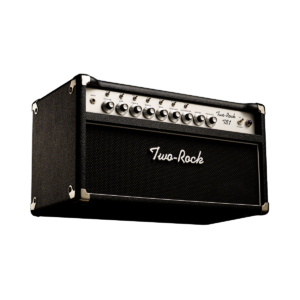
Two-Rock TS-1 100W
One of Two-Rock's most iconic amps. Released in 2010, the TS-1 'Tone Secret' is a two-channel pairing a lush, dimensional rhythm voice with the singing, sustaining lead tone that's become the Two-Rock signature. Touch-sensitive and harmonically rich, it's that holy-grail D-style sound — pristine cleans and a soaring lead — countless players chase. A modern boutique classic.
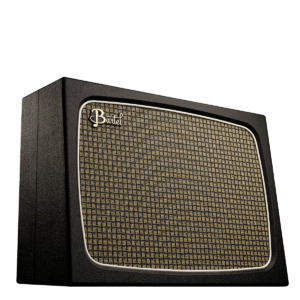
Bartel Roseland
Mark Bartel builds these by hand in Baltimore, and the Roseland is his masterwork: 45 watts of fixed-bias 6L6 with no negative feedback and hi-fi transformers. It's a single channel, but the Multi Voice preamp roams from Super Reverb sparkle to woody tweed to Plexi grind. Spring reverb, bias-modulated tremolo, and a resonant pine cabinet that makes it sing like a saxophone.
Dr. Z MAZ-38 MKII
One of Dr. Z's most enduring designs, born as a 3x10 for Joe Walsh. Four cathode-biased EL84s make 38 deceptively loud watts — chimey, punchy, and percussive, with no negative feedback so it nails both American and British cleans. The signature Cut control and a footswitch boost add reach. Wildly dynamic, and the quintessential country amp. Loved by Brad Paisley
Friedman BE-100 Deluxe
Dave Friedman made his name hot-rodding Marshalls in LA, and his 'Brown Eye' circuit became the most coveted 100-watt boutique amp going. The Deluxe is the full three-channel beast: a Smallbox-style plexi clean that breaks into Super Lead grit, plus the searing BE and HBE drive channels — 100 watts of EL34 with power-amp thump. Cantrell, the Foos, modern Marshall royalty.
Morgan Dual 20
Joe Morgan's hand-wired British-voiced gem. The Dual 20 blends two of his amps: a Normal channel (switchable EF86 or 12AX7 preamp, from pure EL84 chime to ferocious growl) and a Top Boost channel for jangly Vox sparkle. Twenty watts of cathode-biased EL84, plus a brilliant Power Level control scaling from 20 watts to a quarter-watt cleanly. Chimey, dynamic, pedal-friendly.
Carstens Grace
Billy Corgan told his amp tech Brian Carstens he'd never met a high-gain amp he liked — so Carstens built him the Grace. A 100-watt, single-channel EL34 monster with staggering gain and headroom, yet so dynamic it cleans up entirely on your guitar's volume and erupts into full fuzz. The note separation is unreal. Corgan's first and only signature, 50 hand-signed units.
Matchless Laurel Canyon
Matchless's first-ever 6V6 amp, voiced for the late-'60s Laurel Canyon sound — think Neil Young, the Stones, that crash-and-burn '66 jangle. A pair of 6V6s and three 12AX7s make around 20 warm, round, distinctly American watts, with the shimmer Matchless is famous for plus extra midrange girth. Hand-wired in California and built like a tank. Vintage voicing, boutique soul.
Matchless HC-30
The head version of Matchless's legendary C-30 — to many, the holy grail of EL84 amps. Four EL84s in pure Class A make a conservative 30 watts of chime, shimmer, and singing saturation, via two channels: a parallel-triode 12AX7 and a high-gain EF86 pentode with a six-way tone switch. Mark Sampson's 'AC30 that wouldn't break,' a peerless pedal platform. Bob Dylan tours with two.
EVH 5150III Stealth
Eddie Van Halen's 5150III in murdered-out black — and the meanest of the bunch. 100 watts of 6L6 across three channels: a sparkling green clean, plus blue and red channels voiced hotter and angrier than the standard, with extra gain and a nastier edge. Brutal, fat, and crystal-clear, it nails modern metal without a boost in sight. The studio and stage staple of a generation.
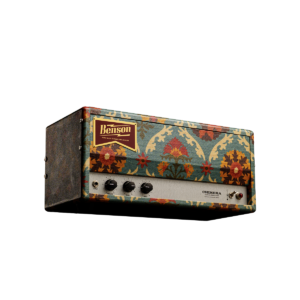
Benson Chimera
Christopher Benson's Portland shop builds amps with a voice all their own, and the Chimera is the beloved Monarch grown up for the big stage: 30 watts from a quartet of 6V6s, hand-wired point to point. Its variable bass control morphs the tone between American warmth and chimey British bite. Sweet, touch-sensitive, three-dimensional, and almost impossible to make sound harsh.
Komet Vimana
From Komet, the Louisiana shop carrying the torch for Trainwreck's Ken Fischer. The Vimana runs a pair of KT88 Gold Lion tubes for 54 watts of cathode-biased Class A power with zero negative feedback — wildly touch-sensitive and harmonically complex. A 'tone stack bypass' control peels away the EQ for extra gain and midrange bite. Big clear lows, lush mids, shimmering highs.
Matchless Coldwater Canyon
The hot-rodded sibling to the Laurel Canyon — same pair of 6V6s and roughly 20 American-voiced watts, but tighter and higher-gain when pushed. Gain down and volume up goes full plexi; crank the gain and it stays focused where the Laurel Canyon gets loose and vintage. A super-interactive EQ and that unmistakable Matchless bark, cut, and definition make it a compact rock beast.
Soldano Super Lead Overdrive SLO-100
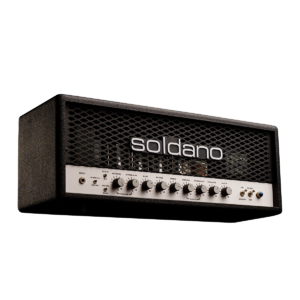
The amp that rewrote high gain. Mike Soldano's hand-wired Super Lead Overdrive arrived in 1987 and set the template every high-gain amp would follow. Its overdrive channel delivers a liquid, singing, sustaining lead, while the clean stays glassy and pure — 100 watts from four 5881s. Clapton, Mark Knopfler, and Warren DeMartini all plugged in. Smooth, refined, utterly iconic.
Tone King Imperial MKII
The amp that made Tone King's name. The Imperial MKII is a 20-watt, two-channel 6V6 combo serving vintage American tones — spunky tweed on the Lead channel, lush blackface clean on the Rhythm — with tube spring reverb and bias-modulation tremolo. A built-in six-step Ironman II attenuator delivers cranked tone at bedroom volume. A benchmark: vintage soul, modern smarts.
Dr. Z Z80
Mike Zaite resurrected one of the rarest amps ever: the 1963 Vox AC80 built so the Beatles could be heard over the screaming. Brad Paisley found an original, then asked Dr. Z to make it tour-proof. The result is 80 watts of cathode-biased EL34 — huge, chimey British cleans and spanky chicken-pickin' bite. Zaite calls it his best build yet.
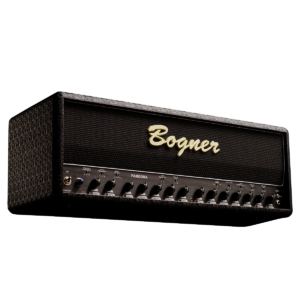
Bogner Uberschall Ultra MKII
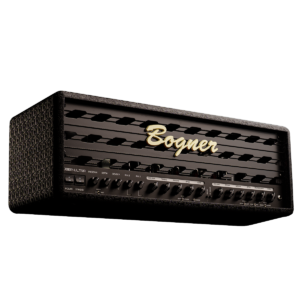
When the Ecstasy's Red channel kept begging for more gain, Bogner answered with the Uberschall — and the MKII is the meanest yet. 100 watts, seven cascading gain stages, two channels with six modes total, plus a Metamorph tightness control and Doom/Focused/Bright voicings. Savagely percussive with an ultra-tight low end, it was built for 7- and 8-string djent and modern metal.
Two-Rock Classic Reverb Signature
Two-Rock's flagship, and a Dumble-inspired marvel. The single-channel Classic Reverb Signature is a tone-shaping powerhouse — switchable 6L6 or 6V6 power, lush tube reverb, a three-way gain-structure switch, and a footswitchable FET boost. It delivers the huge, dimensional Two-Rock cleans that melt into smooth, singing overdrive. Studio-grade tone, the touch of a smaller amp.
Two-Rock Traditional Clean
For players chasing the perfect clean, this is the one. The Traditional Clean distills the Two-Rock philosophy to its purest form — vast, glassy, three-dimensional headroom with that unmistakable D-style sparkle. It's the ultimate pedal platform, taking pedals like a dream while never losing your guitar's natural voice. Hand-built California class, all about clarity and feel.
Two-Rock Silver Sterling Signature
The Silver Sterling Signature is Two-Rock at its boldest. Built on a striking silver-anodized chassis, the SSS produces massive, three-dimensional tone — towering cleans and a rich, harmonically complex overdrive you have to feel to believe. It carries all the articulation and touch sensitivity Two-Rock is known for, scaled up for serious power. A pursuit of iconic guitar tone.
Bogner Ecstasy 101B Pandora
Reinhold Bogner cut his teeth modding Marshalls for LA aces like Steve Lukather before building the Ecstasy — the amp that does it all in one box. Three channels: lush, glassy cleans, a Blue channel that's pure JCM800 with a dark Bogner edge, and a singing high-gain Red. The Pandora is his bespoke, call-to-order flagship, holding every Ecstasy voice ever made. EL34 royalty.
Friedman Plex
Every Friedman amp traces back to one source: Dave's personal 1968 Marshall Super Lead. The Plex is his 'verbatim sonic twin' of that holy grail — 50 watts of raw, clanging EL34 plexi crunch, with Normal and Lead channels you can jumper together just like the original. A clever post-phase master volume and a variac switch tame the beast to any room. The amp that started it all.
Fender Pano-Verb
Jack White's wild reimagining of a Fender, unlike anything before it. The Pano Verb runs in true stereo: 50 watts of 6L6 into a 15-inch Jensen and 20 watts of 6V6 into a 10, with spring reverb you can split between them and a pitch-shifting harmonic tremolo that pans the room. A +26dB boost turns clean to a snarl. A '64 Vibroverb, '60 Vibrasonic and '93 Vibro-King in one.
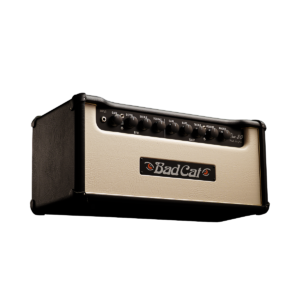
Bad Cat Era 30
Mark Sampson — the man behind Matchless and Bad Cat — returned after nearly two decades to build this 25th-anniversary head, the definitive take on his legendary EF86 circuit. Channel one delivers that lush, AC30-style chime; channel two runs a tighter, punchier 12AX7. Thirty hand-wired Class A watts from four EL84s, built by hand in California. A modern boutique landmark.
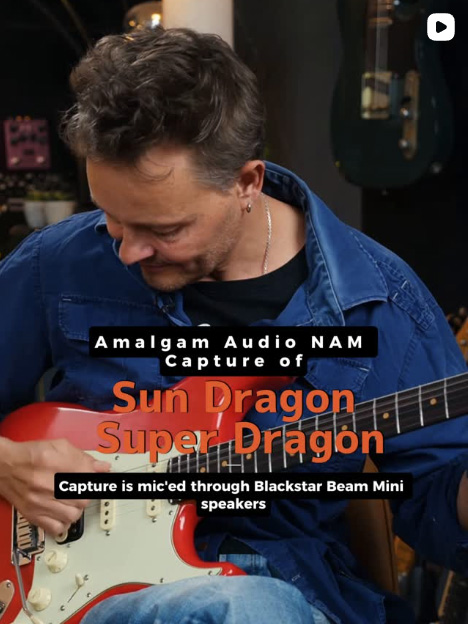
Sundragon Super Dragon
A highly authentic 1:1 replica of Jimmy Page's Nr.1 Marshall amp built by one of today's best engineers - Mitch Colby. The 1968 Marshall Super Bass that was modified by Tony Frank in the 19070's for a quad of 6550 tubes among other mods resulting in a massive headroom, incredible dynamic range and string separation that is beyond any standard Marshall amp. An instant favorite among professional guitarists who have tried it.